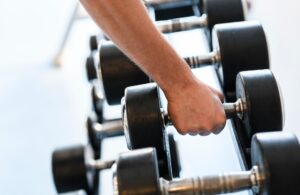
Relationships often mirror the discipline required in the gym. Just as you cannot expect to build muscle without consistent effort, you cannot expect a partnership to thrive without regular maintenance and mutual support. Couples who train together often find that the principles applied to their physical health translate seamlessly into their emotional bond. When you approach your relationship with the same intentionality as your training regime, you discover that the mechanics of lifting weights or running miles share surprising similarities with navigating life's challenges together. This connection goes beyond just spending time together; it is about learning how to push, pause, and protect one another.
Building trust through shared fitness activities
Trust is the bedrock of any successful partnership, and few environments test this quality quite like a gym floor. When you act as a spotter for your partner during a heavy lift, you are literally holding their safety in your hands. This physical act of support creates a powerful psychological feedback loop. You learn to read their non-verbal cues, sensing when they are struggling and when they have the strength to push through on their own. Participating in shared fitness activities—whether it is rock climbing, tandem kayaking, or simply spotting a bench press—reinforces the idea that you have each other's backs. It teaches you to be present and attentive, qualities that are just as vital when discussing finances or future plans as they are when handling a barbell.
Communication during intense fitness workouts
Effective communication is often cited as the key to a happy relationship, but it is rarely tested under pressure in everyday life. During intense fitness workouts, however, clear and concise communication becomes essential. You cannot be vague when coordinating movements or pacing a long run; you must be direct and encouraging. Learning to give and receive feedback without taking offence is a critical skill developed in these moments. If your partner corrects your form during a squat, you learn to see it as helpful guidance rather than criticism. Transferring this dynamic to your home life means you become better at discussing sensitive topics without defensiveness, viewing your partner's input as a way to improve the "team" rather than a personal attack.
Celebrating small wins and milestones
In the world of fitness, progress is often measured in small increments—a slightly faster kilometre, a heavier lift, or better flexibility. Recognising and celebrating these micro-achievements is crucial for long-term motivation. Similarly, relationships thrive on the acknowledgement of small victories. Couples who engage in fitness exercises together develop a habit of cheering for each other’s progress. This creates a culture of appreciation that naturally extends beyond the gym. When you get used to saying "great job" after a tough set of burpees, it becomes second nature to express gratitude when your partner handles a difficult phone call or cooks a nice meal. Celebrating these moments builds a reservoir of positive sentiment that acts as a buffer during tougher times.
Overcoming plateaus and setbacks together
Every fitness journey encounters plateaus where progress seems to stall, or injuries that force a step back. These moments can be frustrating, but they teach resilience and patience. Navigating these slumps together strengthens a couple's ability to handle life’s inevitable downturns. Perhaps one of you is sidelined with an injury while the other continues to train; this imbalance requires empathy and adjustment. You learn that progress isn't always linear and that supporting a partner means staying committed even when things aren't moving forward as planned. It reinforces the commitment to the long game, reminding you both that a relationship, like health, is a lifelong pursuit rather than a short-term goal.
Finding balance in your routine
Finally, training teaches the vital lesson of balance. Overtraining leads to burnout, while rest days are essential for growth. In relationships, this translates to respecting each other's need for space and recovery. Just as you wouldn't force your body to perform high-intensity fitness workouts seven days a week, you shouldn't expect your relationship to operate at maximum intensity 24/7. Couples who understand fitness know that rest isn't laziness; it is preparation for the next challenge. By respecting boundaries and allowing for downtime, you ensure that when you are together, the quality of your interaction is high. This balance prevents emotional burnout and keeps the relationship fresh, energetic, and sustainable for the long haul.